
 0
0



- Home
- Blog
- Hair Extension Knowledge
- Guide to Popular Hair Extension Types Understanding Materials Pros and Cons
Guide to Popular Hair Extension Types Understanding Materials Pros and Cons
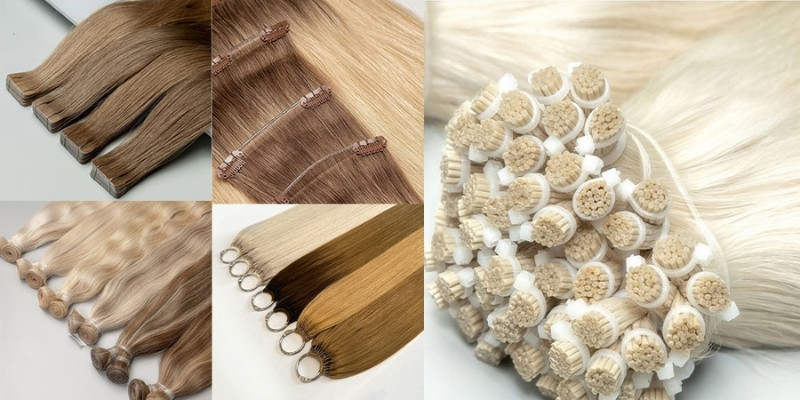
Hair extensions are a common way to quickly add volume, length, or change their hairstyle. There are many types of hair extensions on the market, each with its own suitable hair texture and installation method. As hair extension technology continues to evolve s, consumers often feel unsure how to choose when faced with different hair extension types such as adhesive, braided, or machine-applied extensions.
Through this article, hair extension specialist Lina will guide you through the mainstream hair extension methods on the market, the differences in hair materials, as well as approximate price ranges and maintenance methods, helping you find the most suitable hair extension supplier for your needs.
Discover the Five Main Hair Extension Types to Find Your Perfect Match
The following introduces several of the most common hair extension types currently on the market, including their application principles, pros, and cons. Whether you have fine or coarse hair, you can find a suitable style among these categories.
〈Extended Reading: How to Apply I-Tip Hair Extension? The Natural, Secure Choice!〉
Hair Extension Types 1. K-tip Hair Extensions
K-tip hair extensions use a keratin-based adhesive that is fused to small bundles of natural hair near the roots using professional heating tools. The advantage of this hair extension type is that the attachment points are small, allowing the hair to move naturally, and they can last for 3 to 4 months. However, the application is very time-consuming, usually taking 2 to 4 hours to complete, and removal requires specific chemical solvents; improper handling can easily cause damage to natural hair.
〈Product Recommendation: K tip Hair Extensions〉
Hair Extension Types 2. Tape-in Hair Extensions
Tape-in hair extensions involve sandwiching natural hair between two hair pieces with medical-grade adhesive tape. The biggest advantage of this hair extension type is the extremely fast installation speed; a skilled stylist can complete a full head of extensions in about 45 minutes to 2 hours, and the attachment points are flat and seamless, resulting in a very natural appearance. However, as the hair grows, you must return to the salon every 6 to 8 weeks to have the tape positions readjusted.
〈Product Recommendation: Tape in Hair Extensions〉
〈Extended Reading: How to Choose Tape-in Hair Extensions: Understand Market Trends and Find the Right Supplier〉
Hair Extension Types 3. Clip-in Hair Extension
Clip-in extensions are the most convenient temporary hair extension type, featuring small metal clips sewn onto the hair pieces so users can clip them to the roots of their natural hair themselves. The advantage is that they require no glue or heat, cause little to no damage to natural hair, and can be removed at any time. However, clip-in extensions cannot be worn while sleeping or washing hair, and the repeated daily application and removal can be tedious. If the positioning is incorrect, you may also feel the weight pulling on your scalp.
〈Product Recommendation: Clip in Hair Extension〉
〈Extended Reading: Choosing the Right Clip-in Hair Extensions: A Guide to Real Human Hair & Suppliers〉
Hair Extension Types 4. Feather Hair Extension
Feather hair extension is a newer hair extension method that is highly labor-intensive. Designers use special silk or crystal threads to weave and knot small bundles of hair extensions one by one with the natural hair. The advantage is that there is virtually no foreign-body sensation from residual glue or metal buckles, and the extensions are highly discreet; it can be combed and washed normally like real hair. However, the technical threshold is high, the application time is extremely long, and the cost is usually the most expensive among all hair extension types.
〈Product Recommendation: Feather Hair Extension〉
hair extension types 5. Weft Hair Extensions
Weft hair extensions is a more traditional method of hair extension. The stylist first braids the natural hair into small cornrows close to the scalp, and then uses a special needle and thread to sew the entire row of hair wefts directly onto the braids. Because no chemical glue or heat is required during the process, it has the least chemical irritation to the scalp. This hair extension type is suitable for users who want to increase a large amount of hair thickness at once, but if the natural hair is too soft or the scalp is sensitive, users may feel some pulling, tightness, or heaviness in the early stages.
〈Product Recommendation: Weft Hair Extensions〉
〈Extended Reading: Understand the Pros and Cons of Weft Hair Extensions and Find a High-Quality Supplier!〉
Comparison Chart of Hair Extension Types
| hair extension types | Suitable Hair Types | Average Maintenance Time | Pros | Cons |
|---|---|---|---|---|
| K-tip hair extensions | All hair types | 3-4 months | Long-lasting effect, natural attachment points | Time-consuming application, requires professional solvent for removal |
| Tape-in hair extensions | Fine hair, normal hair types | 6-8 weeks | Fast application, high scalp comfort | Sensitive to oil and alcohol, requires frequent adjustments |
| Clip-in hair extensions | All hair types | Daily wear | Zero damage, can be quickly put on and taken off by yourself | Must be removed daily, cannot be worn while sleeping |
| Feather Hair Extensions | Normal hair, coarse hair | 2-3 months | No glue or beads, extremely high comfort and invisibility | Expensive, hand-weaving is very time-consuming |
| Weave-in Hair Extensions | Coarse hair, medium volume | 6-8 weeks | No chemical glue, can add significant thickness | Slight scalp tightness, hair takes longer to dry after washing |
Does Hair Quality Affect the Results of Different Hair Extension Types?
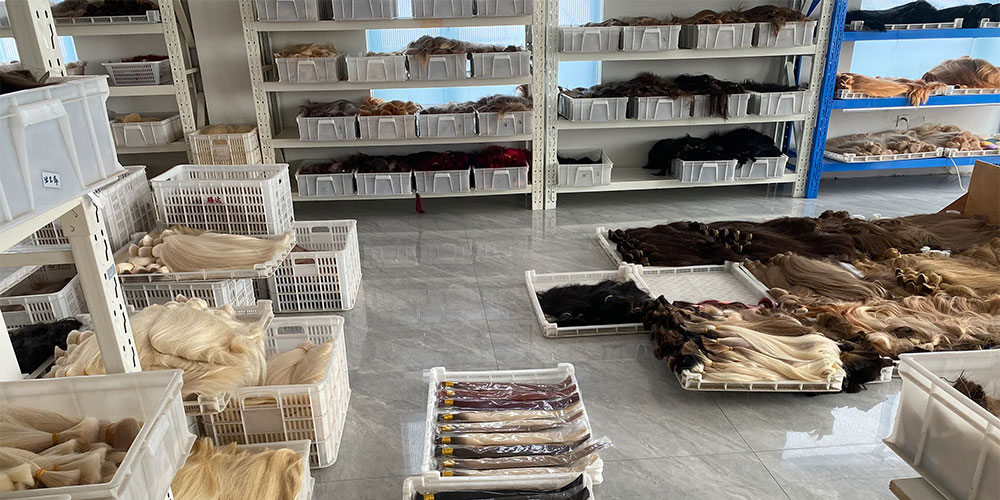
Regardless of which hair extension type you choose, the hair material itself is a key factor in determining the naturalness of the final result and the lifespan. Common materials are divided into the following three types:
Remy Hair or Virgin Hair
Remy hair and virgin hair are among the highest-quality materials for hair extensions on the market. In Remy Hair, the cuticles of all hair strands remain intact and face the same direction, which reduces tangling and provides a more natural shine. Virgin Hair is a higher grade of raw hair than Remy Hair, meaning these hairs have never undergone any chemical dyeing or perming treatments from growth to collection. Using this type of human hair for extensions allows for subsequent perming, dyeing, and deep conditioning just like your own hair.
Synthetic Fibers
Hair extension types made of synthetic fibers (such as PVC or PET materials) are relatively inexpensive, and manufacturers can produce them in various bright colors and curls. However, the disadvantages are also obvious, such as overly vivid colors, unnatural luster, and even a tendency to tangle and become difficult to comb. In addition, most fiber materials are not heat-resistant and cannot be styled with curling irons or flat irons unless the product is specifically labeled as heat-resistant or flame-retardant fiber.
Non-Remy Hair
This type of hair extension is usually mixed human hair collected from combs or barbershops. Because the direction of the cuticles is inconsistent during collection, it is prone to severe tangling when worn. To solve this problem, factories usually use acidic chemicals to destroy the surface cuticles and apply a thick layer of silicone on the outer layer. When these hair extension types are first purchased, they look very smooth, but after a few washes or once the silicone wears off, they become dry and extremely prone to tangling.
How to Choose a High-Quality Hair Extension Supplier
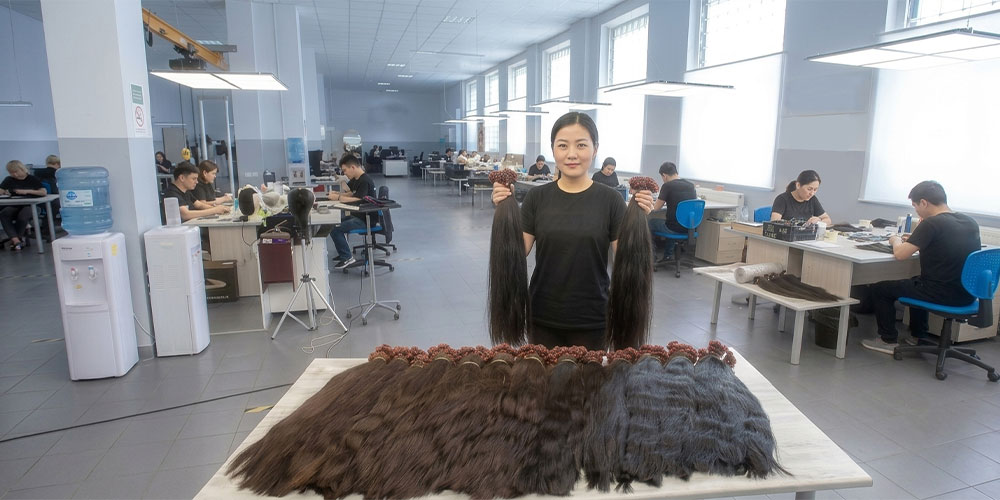
For hair salons or operators who provide hair extension services over the long term, choosing a reliable hair extension supplier is very important. The quality of the supplier’s hair source will directly affect the comfort of the customer's scalp and their willingness to repurchase, which is the foundation of a stable business.
Verify Hair Source and Processing Techniques
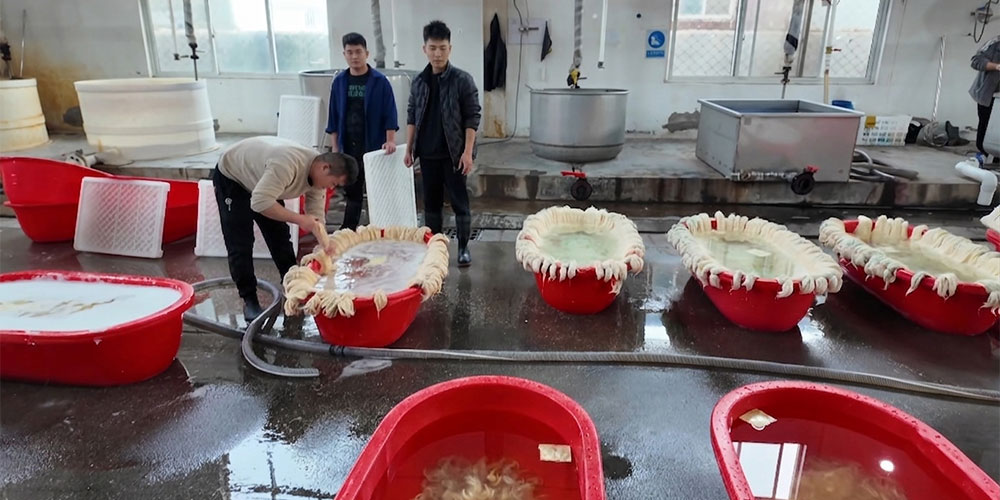
High-quality suppliers must be able to clearly state the source of the hair and provide samples to prove they are genuine Remy hair (Remy hair or virgin hair). As a hair salon owner, you can use washing tests and burn tests to confirm whether the hair you purchased is mixed with synthetic fibers and whether it has undergone excessive acid washing treatment.
〈Extended Reading: What You Must Know Before Working with Wholesale Hair Suppliers: Pricing, Quality & Buying Tips〉
Customization Capabilities
The market demand for hair extension colors is ever-changing. A professional supplier must have strong customization capabilities, including providing dozens of color charts, highlights, and ombre dyes, or being able to adjust the size and weight of the tape or the size of the hair extension interface according to the customer's head shape and hair volume needs to meet different styling requirements.
〈Extended Reading: Hair Extension Vendors Guide: Hot Styles, Supplier Comparison & Common Mistakes to Avoid〉
Diverse Product Range and Stable Supply
Capable suppliers usually have mature production lines and can supply a full range of hair extension types. Whether it's seamless tape-in hair extensions or handmade feather hair extensions, they can provide a stable supply. This not only reduces the trouble of multi-source procurement but also avoids the risk of facing stockouts during peak seasons.
Excellent After-Sales Service
All hair extension types are consumables by nature, but it is also important whether the supplier is willing to provide a reasonable support mechanism. For example: whether they provide a warranty for large-area tangling caused by non-human factors, or fast return and exchange services for defective products. Having clear communication channels and perfect after-sales service will affect trust in long-term cooperation.
〈Extended Reading: How to Choose a Hair Extension Supplier? A Guide for Hair Quality, Supply, and After-Sales Details〉
Common Hair Extension Types Q&A!
Q1. How long do hair extensions last?
How long hair extensions last depends on the chosen hair extension types and daily care habits. Clip-in hair extensions are for daily wear and need to be removed every day; tape-in and weft hair extensions require a salon visit for adjustment approximately every 6 to 8 weeks. It is recommended to seek professional removal for hair extensions to avoid severe tangling of natural hair.
Q2. Will hair extensions damage my natural hair?
As long as they are installed and removed by professionally trained hairstylists, and the hair extension types are chosen at a weight your natural hair can support based on its thickness, the damage to natural hair is actually minimal. In many cases, hair loss is caused by breakage from keeping extensions in too long without removal or by forcibly pulling out attachment points yourself.
Q3. Can hair extensions be reused?
Most high-quality hair extensions are reusable. For example, with tape-in extensions, you only need to clear the residue and apply new medical-grade adhesive tape after removal to use them again. Feather extensions and clip-in extensions also only need to have their positions shifted upward to continue being used.
Q4. Can hair extensions be curled?
If your hair extension material is high-quality human hair (Remy Hair and Virgin Hair), you can treat it exactly like your own natural hair, using hair dryers, curling irons, or flat irons for heat styling. However, if the material is mixed with synthetic fibers, you must confirm whether the fiber is heat-resistant; otherwise, it may melt and shrivel immediately upon contact with a heat source.
Conclusion
When choosing hair extension types, it is recommended to first evaluate your natural hair quality. Understanding the approximate price and the differences between materials can help you avoid unnecessary consumer traps. Whether you are a consumer pursuing beauty or a distributor looking for high-quality hair sources, choosing a transparent and reputable supplier will bring the best hair extension experience. Shiny Hair provides top-grade Remy hair and virgin hair extension types, with different weights and colors to choose from. If you are looking for high-quality hair extension products with a wide range of options, please contact Shiny Hair, and let Shiny Hair provide you with the most suitable professional solution.

Lina
Shiny Hair Senior Hair Product Research Editor
hair extension specialist & content editor at Shiny Hair, has over 8 years of experience in hair product research and salon support.

Article Classification
Recent Articles
- Guide to Popular Hair Extension Types Understanding Materials Pros and Cons
- What Is the Best Clip-In Hair Extension Brand for Beginners Looking for Durability and Comfort?
- Why Human Hair Extensions Vary So Much: Key Quality & Supply Issues Buyers Miss
- How to Apply I-Tip Hair Extension? The Natural, Secure Choice!
- Understand the Pros and Cons of Weft Hair Extensions and Find a High-Quality Supplier!